Keynote Speakers

(Names sorted in alphabetical order)

Chingiz Hajiyev

Istanbul Gelisim University, Dept. of Aeronautical Engineering

Presentation Title: Difference Kalman Filter with Adaptive Threshold Against Time-Varying Systematic Measurement Errors

The article proposes a difference Kalman filter (DKF) that takes into account unknown systematic measurement errors. In this case, the filtering algorithm estimates the differences between two successive states. The differences between two successive measurements are used as measurements, as a result of which the systematic measurement errors mutually exclude each other. It is shown that in the presence of time-varying systematic measurement error, using constant confidence bounds to detect faults in the DKF will lead to normal measurements being considered faulty after a certain time. Therefore, it is proposed to define adaptive confidence bounds for the normalized innovation sequence of DKF at each estimation step. The developed filter can be widely used in practice, in particular, when processing information in inertial navigation systems, in which errors slowly grow over time and these errors are unlimited.

Prof.Dr. Chingiz Hajiyev, graduated from Moscow Aviation Institute, Moscow, Russia, with honors in 1981. He received his Ph.D. and DSc (Eng) degrees in Process Control in 1987 and 1993, respectively. 

       From  1987  to  1994  he  worked  as  a  Scientific Worker, Senior  Scientific  Worker,  Chief  of  the Information-Measurement Systems Dept.   at  the ASPA “Neftgazavtomat”. From  1994  to  1996  he  was  a  Leading – Scientific  Worker  at  the  Institute  of  Cybernetics  of  the  Academy  of  Sciences  of  Azerbaijan  Republic. He  was  also  a  Professor  in  the  Department  of  Electronically-Calculated  System  Design, Azerbaijan  Technical  University, where  he  had  been  teaching  1995-1996.

       He joined to Department of Aeronautical Engineering, Istanbul Technical University, Turkey in 1996 as a Professor. From 2016 to 2023, he was also Head of the Aeronautical Engineering Department. He is the author more than 600 scientific publications including 15 books, 40 book chapters and more than 400 international journal and international conference papers. More than 100 scientific papers are published in the Science Citation Index Expanded (SCIE) journals. His research interests include attitude determination and control, fault diagnosis, fault tolerant control, Kalman filtering and integrated navigation systems

1- Navigation
2- Fault diagnosis
3- Fault tolerant control
4- Kalman filtering
5- Satellite attitude determination and control

Eva Melaviti

College of Aviation, Worldwide Campus, Embry-Riddle Aeronautical University, USA

Presentation Title: Bridging the Gap Between Technology and Workforce; Training for Innovation and the Future of Aviation Maintenance
Bridging the Gap Between Technology and Workforce; Training for Innovation and the Future of Aviation Maintenance

Aviation is entering a new era of rapid technological transformation, driven by advancements in artificial intelligence, predictive maintenance, new propulsion systems and fuels, and increasing system complexity. While these innovations promise significant improvements in efficiency, safety, and sustainability, their successful adoption depends on a critical yet often overlooked factor: workforce preparedness. The goal of this keynote is to highlight the issue that aviation maintenance training systems are not evolving at the same pace as the technologies they are expected to support. Traditionally designed around stability, compliance, and procedural execution, current training approaches may limit the industry’s ability to effectively integrate innovation into operational practice. Focusing on academia’s role, the presentation highlights the need to shift toward innovation-oriented training. This includes fostering systems thinking, interdisciplinary knowledge, data literacy, and continuous learning environments that mirror the dynamic nature of modern aviation. Education pathways must act as bridges between research and real-world application, enabling experimentation and early exposure to emerging technologies. The future of aviation maintenance innovation will be determined not only by technological breakthroughs but by how effectively the next generation of professionals is trained to understand, trust, and implement them.

Dr Eva Maleviti is an Assistant Professor at Embry-Riddle Aeronautical University (ERAU). After a long-term career in the aerospace industry as academic coordinator and consultant in MROs and airlines, in 2022 she joined ERAU as the program coordinator of the MS in Aviation and Aerospace Sustainability. She has been involved in various industry projects related to aviation sustainability strategies, ESG plans, and other aviation-related initiatives. Dr Maleviti also works as a technical expert for aviation emission metrics and calculations in the Accreditation System of Greece for ICAO CORSIA and EU-ETS schemes. She is involved in industry training for aviation topics, such as human factors, aviation legislation, safety, quality management and auditing techniques, and other EASA-related courses. She is involved in research projects regarding the adoption of environmental management systems in aviation, energy management in aviation buildings, professionals’ perspectives in aviation sustainability, airports, hydrogen certification, and standardization. She has authored over 15 journal publications, presented at more than 30 international conferences and industrial workshops. She is the author of two books: Fundamentals of Sustainable Aviation and Energy Management and Renewable Energy, and she is a Member of the Royal Aeronautical Society. She has a Ph.D. in Sustainability, Energy and Environment, an MSc in Sustainable Development and a Graduate certificate in Aviation Maintenance. 

  1. Academia
  2. Innovation
  3. MRO training
  4. aviation education
  5. sustainability

Fuat AKPINAR

HeliPLAT Inc.Co. Chairman of the Board

Presentation Title: Helicopter Platforms and Their Future
The Critical Importance of Helicopter Operations
Basic Parameters of Platform Design
Heliport – Definition and Areas of Use
Helideck – Marine and Offshore Platforms
Civil and Military Platform Requirements
International Standards: ICAO and CAP 437
Heliport Legislation in Türkiye: SHY-14B
Military Marine Platforms
Infrastructural Factors and Accident Prevention
VTOL Drone Systems and the Need for Next-Generation Platforms

After serving in the Turkish Navy for 25 years, I founded HeliPLAT Inc. Co. in 2016. Over the past decade, we have completed the certification engineering, testing, and training for Helicopter Platforms and Hangars in newly constructed projects at both civilian and military shipyards. For the past five years, I have served as the Head of Testing and Certification at the SAHA Istanbul Cluster. For the past year, I have also been the Chairman of the Board of Directors of SARES International Association for Sustainable Aviation and Energy Efficiency.

  Helicopter Platforms

Islam Isgandarov

National Aviation Academy, Faculty Physics and Technologies, “Aerospace instruments” department

Presentation Title: Model of Earth optical-electronic orientation system for small satellites

The presented work analyzes the functional capabilities of optical-electronic orientation and stabilization systems, investigates application schemes in satellites, and considers the development of a model of such a system that ensures the orientation of small satellites to the Earth. The functional limitations inherent in existing orientation and stabilization systems are analyzed and it is shown that the complexity and structural features of astronomical orientation systems significantly complicate their application in small satellites. As a result of research and reports, it was determined that the introduction of microbolometric matrices (MBM) and photodetectors based on them, developed in recent years, which do not require cooling, allows the development of new types of optical-electronic systems. During the analysis and reports, it became clear that currently uncooled microbolometric photodetector matrices are produced by leading companies in many countries. After reporting the power of thermal radiation in the IR optical range generated by the Earth falling on the MBM at an altitude of 700 km, it was found that the sensitivity of the selected bolometric element is significantly higher than the power of thermal radiation falling on the photodetector in the IR range. As a result, a structural model of a compact, autonomous, and higher-precision optical-electronic orientation system based on an uncooled MBM photodetector and applicable to small Earth-facing satellites has been proposed.

 He graduated from the Sevastopol Instrument-Making Institute (Crimea, Ukraine) in 1985. From 1985 to 1995, he worked at the Azerbaijan Institute of Photoelectronics (formerly a branch of the All-Union Institute of Applied Physics) as an engineer and researcher.  From 1991 to 1995, he also worked at the University of Architecture and Civil Engineering in the Physics Department as a research fellow and was a candidate for a PhD in the department.   

          Since 1995, he has worked at the National Academy of Sciences (NAA) in the positions of senior researcher, laboratory head, and department head. Since 2005, he has been head of various departments. He currently heads the Aerospace Instruments Department. 

          He is engaged in scientific and pedagogical work, supervises master’s and doctoral dissertations, grant and state-funded projects. He develops new educational programs, curricula, and specialty programs. Islam is engaged in research in the fields of electronic and automated systems, as well as aerospace engineering. His current project is “Modern Problems of Aviation Avionics.” 

           His primary research interests focus on the development of models, sensors, and devices for contactless monitoring of electrical parameters, navigation system parameters, and weight and center of gravity measurement systems. He also conducts research into the study and development of nanosensors for various applications. He works on signal processing for radar and radio navigation systems using modern methods and tools, particularly filters and MEMS modules. 

           He has authored approximately 200 scientific and methodological papers, including 12 books (including 4 text books, 3 student books , and the remaining methodological aids), 6 patents, and over 70 articles in scientific journals. More than 15 of his scientific papers are indexed in SCOPUS, and five in Web of Science.

  • Spacecraft
  • Satellite
  • Orientation system
  • Astronomical
  • Optical-electronic system
  • Micro bolometric matrix
  • Photoreceiver

Jianci Yang

Chairman of World Unmanned Aerial Vehicle Federation
Chairman of Drone World Congress
President of Shenzhen Unmanned Aerial Vehicle Industry Association

Presentation Title: Creating A New Low-Altitude Scenario,Sharing The Development Path Of China's Characteristic Low-Altitude Economy
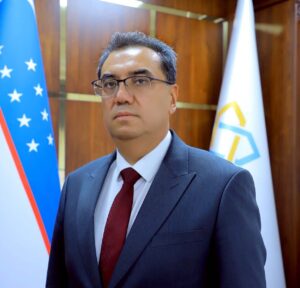
China’s Low-Altitude economy is embarking on a rapid growth trajectory, with civil unmanned aerial vehicles serving as a core driving force and playing a pivotal role. From an industrial perspective, the UAV manufacturing sector has achieved progressive maturity alongside continuous advances in innovation capacity, fueling coordinated development across upstream and downstream industrial chains. In terms of application scenarios, civil unmanned aerial vehicles are widely deployed in logistics delivery, agricultural plant protection, surveying and inspection, film and television shooting and other sectors, lifting production efficiency and fostering new economic growth drivers. On technological innovation, breakthroughs have been secured in core UAV technologies including flight control, communication transmission and intelligent perception, substantially boosting flight safety and operational reliability. Leveraging its unique competitive strengths, civil unmanned aerial vehicles are powering the high-quality development of China’s low-altitude economy. The sector boasts broad prospects for future growth: unmanned aerial vehicles will achieve in-depth integration with an expanding array of industries, and propel the global expansion of China’s low-altitude economy ecosystem.

Chairman of the World UAV Congress, Chairman of the World UAV Federation, International President of the Asia-Pacific Security Association, President of Shenzhen UAV Industry Association.Visiting Professor at Beihang University, Youth Science and Innovation Mentor of the School of Management, Harbin Institute of Technology; Senior Research Fellow of the Guangdong-Hong Kong-Macao Greater Bay Area Low-Altitude Economy Research Institute, and Chief Expert of Zhong An Unmanned Systems Research Institute. In 2015, he initiated and founded the Shenzhen UAV Industry Association. He has formulated 87 group standards for civil unmanned aerial vehicles, and published more than 200 papers covering public security, unmanned systems, intelligent security and other fields. He has organized the compilation of over 50 sets of books focusing on security prevention, unmanned systems, intelligent transportation, eVTOL and other sectors, including China UAV Industry Development Report and Global UAV Industry Development Report.He has hosted 20 editions of China International Public Security Expo, 10 sessions of the World UAV Congress, and 11 editions of Shenzhen International UAV Exhibition. He is the recipient of numerous honors, including the Global UAV Contribution Award, and Top Ten Outstanding Contribution Award for Exhibitions on the 40th Anniversary of Shenzhen’s Establishment as a Special Economic Zone.

  • Low-Altitude Economy
  • Unmanned System
  • International Industrial Layout
  • High-Quality Development

Khamidov Obidjon

Rector of Buhara State University, Uzbekistan

Presentation Title: Role of AI in university governance

Max. F. Platzer

Distinguished Professor Emeritus Naval Postgraduate School, USA

Presentation Title: On the Quest for National Sustainable Energy Independence
Mustafa Atılım Gökçe

Founder & Managing Director

Presentation Title:

Vector Bilimsel Test Cihazları Ltd. Şti. began operations in 2005 in the field of laboratory test systems, built on a philosophy of domestic and national engineering. The company develops and manufactures high-precision test devices for the defense industry, iron-steel, automotive, mining, and energy sectors.

Vector offers advanced technology products such as Universal Testing Systems, Charpy and Izod Impact Testing Machines, Drop Weight Impact Test Systems, hardness testing machines, and cement testing equipment. Carrying out all design, software, and manufacturing processes with its own engineering team, Vector develops solutions compliant with ISO, ASTM, and EN standards and exports to international markets across Europe, the Middle East, Central Asia, and Africa. Its domestic R&D and advanced engineering capability delivers reliability, accuracy, and pioneering solutions in digital transformation for critical sectors.

Mustafa Atılım Gökçe is an engineer and entrepreneur with over 25 years of experience in laboratory test systems and material testing technologies. While studying at Marmara University’s Faculty of Technical Education, he entered the test equipment industry in 1998.
In 2005, guided by a philosophy of domestic and national engineering, he founded Vector Bilimsel Test Cihazları Ltd. Şti.

He has led numerous projects in sectors such as aviation, defense industry, automotive, and iron-steel, and has collaborated with institutions including MKE, ASELSAN, and TÜBİTAK. Today, he continues his work on digitalization, Industry 4.0, and high-precision measurement systems, representing domestic test technologies on a global scale.

Material testing technology,Universal Test Systems, Charpy Impact Test, Izod Impact Test, Drop Weight Impact Test System, cement testing equipment, ISO standards, ASTM standards, EN standards, Industry 4.0, digitalization, high-precision measurement systems, R&D, export, international markets

Samira Keivanpour

Polytechnique Montreal – Associate Professor

Presentation Title: Closing the Loop Under Global Constraints: Driving MRO Longevity Through Local Capacity
Closing the Loop Under Global Constraints: Driving MRO Longevity Through Local Capacity

Recent global supply chain disruptions have shown the vulnerabilities of linear MRO strategies. To maintain operations, the industry must shift toward circular models that prioritize asset longevity and material sovereignty.

This keynote introduces a dynamic framework to help decision-makers build resilient, closed-loop systems by addressing four interdependent pillars. We will examine the Technology required to extend material lifecycles through remanufacturing, coupled with the localized Supply Chains necessary to overcome global bottlenecks. These operational shifts must be supported by robust Governance structures that certify the safety of recovered components, and sustainable Human Capital strategies that develop the specialized workforce needed to manage this transition. By combining these elements, operators can reduce overseas dependency and secure long-term, regional industrial capacity.

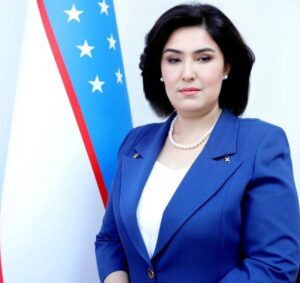
Samira Keivanpour is an Associate Professor of Mathematical and Industrial Engineering at Polytechnique Montreal, Canada, and heads the Poly Circle X.0 lab. Her research focuses on sustainable manufacturing and logistics within the framework of Circular Economy X.0. She explores the application of ML/RL for enhancing triple bottom line (3BL) impact, with applications in end-of-life products, circular manufacturing, and Industry 4.0 technologies to drive sustainable solutions. She is a member of CIRODD, GERAD, and CIRRELT.

  • Circular Manufacturing,
  • Circular Design
  • Sustainable Aviation
  • Decision Intelligence

Sadoqat Siddiqova

Rector of Bukhara State Technical University, Uzbekistan

Presentation Title: Training green energy engineers based on the integration of industry, education, and scientific research

T. Hikmet Karakoc

Research Dean of Piri Reis University, Turkey

Presentation Title: Recent Developments in Transportation Technology, MRO & Operations: Innovation, Sustainability and the SARES Vision
Tursunov Nodirjon Kayumjonovich

Head of the Materials Science and Mechanical Engineering Department, Tashkent State Transport University, Uzbekistan

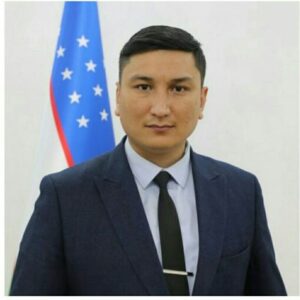
Presentation Title: Integration of education and production as a way to improve the quality of specialist training in transport safety